The grinder you use has more impact on your coffee's flavor than almost any other piece of equipment you own - including your brewing device. This surprises most people, who focus on the brewer while grinding with whatever came in the kitchen. Understanding why grind consistency matters so much makes the burr vs blade debate easy to resolve.
The short answer: burr grinders produce consistent particle sizes that extract evenly; blade grinders produce a mix of powder and chunks that extract unevenly. That inconsistency is the root cause of most "bad grinder" coffee problems - sour-bitter muddle, flat flavor, and irreproducible results.
How Blade Grinders Work
Blade grinders work exactly like a blender or a food processor: a spinning metal blade chops and shatters coffee beans. The longer you run it, the finer the result - in theory. In practice, the blade creates a chaotic chopping action that produces a wide distribution of particle sizes. Some beans near the blade get ground fine; beans near the edges get chopped less. Fines (powder) accumulate at the bottom while larger chunks remain on top.
The result is a mixture of very fine particles and very coarse particles in every grind. When you brew this, the fine particles over-extract (producing bitterness) and the coarse particles under-extract (producing sourness) simultaneously. The cup tastes muddy, inconsistent, and often both sour and bitter at once.
Blade grinders also generate heat from friction, which can degrade delicate aromatic compounds in the beans - especially in light roasts where those aromatics are most prominent.
How Burr Grinders Work
Burr grinders use two abrasive surfaces (burrs) - one stationary and one rotating - between which beans are fed and ground to a consistent size. The gap between the burrs determines the grind size: wider gap = coarser grind, narrower gap = finer grind. Every particle that passes through exits at approximately the same size.
The consistency this produces is the key difference. When all particles are the same size, they all extract at the same rate. Hot water encounters a uniform bed of grounds and pulls flavor compounds evenly - no under-extracted chunks, no over-extracted fines. The result is a cleaner, more balanced cup that accurately reflects the beans you're using.
Burr grinders come in two types: flat burr (two parallel plates) and conical burr (a cone inside a ring). Both produce far more consistent grinds than blade grinders. Conical burrs are found in most consumer grinders; flat burrs are common in higher-end commercial and prosumer equipment.
Burr Grinder
- Consistent particle size = even extraction = better flavor
- Adjustable grind size from fine to coarse
- Reproducible results - same settings produce same cup
- Works well for all brewing methods
- Higher upfront cost ($15–$200+)
- Slower than a blade grinder for the same volume
Blade Grinder
- Inconsistent particle sizes = uneven extraction = muddy flavor
- No reliable way to control grind size
- Results vary between uses
- Generates heat that can damage aromatics
- Lower cost ($10–$25)
- Fast and simple to operate
The Flavor Impact: Is It Really That Noticeable?
Yes - noticeably so, even in a side-by-side taste test with the same beans. The most obvious improvement when switching from blade to burr is the elimination of the simultaneous sour-bitter confusion. A blade grinder cup often has an unresolved muddiness; a burr grinder cup of the same beans has a cleaner, more defined flavor where you can actually taste what the coffee tastes like.
The second improvement is repeatability. With a blade grinder, the grind varies based on how long you run it, how much coffee is in the container, and where beans were sitting relative to the blade. With a burr grinder set to a specific number, you get the same grind every time - which means when you find settings you like, you can reproduce them consistently.
Light and medium roasts benefit most dramatically from a burr grinder upgrade. Their delicate origin flavors are easily destroyed by uneven extraction. Dark roasts are more forgiving - a blade grinder with dark roast produces more acceptable results than with lighter beans - but still taste better when ground evenly.
Cost: How Much Do You Need to Spend?
Entry-level burr grinders start around $15–$20 for basic electric models. These outperform any blade grinder despite their low price. Mid-range burr grinders ($40–$80) offer better burr quality, more grind settings, and less static or mess. High-end grinders ($150+) are for coffee enthusiasts who need precision for espresso or want commercial-grade consistency.
For home brewing - French press, pour over, drip, AeroPress - a $15–$25 burr grinder makes a real difference and doesn't require a large investment. The gap between a $20 burr grinder and a $20 blade grinder is significant; the gap between a $20 burr and a $150 burr is real but far less dramatic for most methods.
An Affordable Burr-Style Entry Point
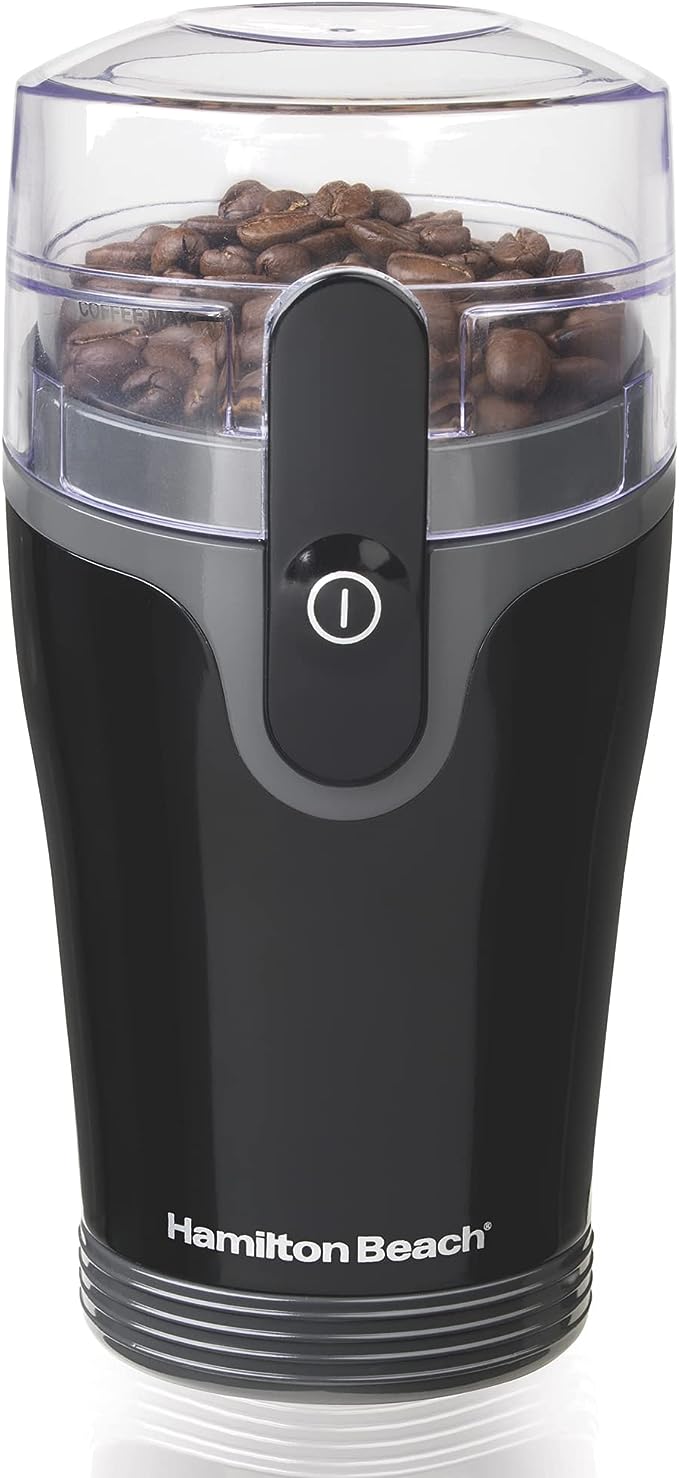
Hamilton Beach Fresh Grind Electric Coffee Grinder - $18
At $18, this grinder is at the entry level of the electric grinder market. It produces a more consistent grind than a blade chopper and allows you to adjust coarseness for different brewing methods. For home brewing of French press, drip, or pour over, it represents a meaningful upgrade without a significant cost. It's the most effective $18 you can spend to immediately improve your daily cup.
Check it out →Grind Consistency and Coffee Scales
A burr grinder's benefits are fully realized only when you also measure your coffee by weight rather than by volume. Coffee scoops are imprecise: different roasts and bean densities produce different gram weights per scoop. A kitchen scale eliminates this variable, letting you dial in the exact coffee-to-water ratio that produces the cup you want - and reproduce it exactly next time.
The combination of a consistent burr grinder and a simple kitchen scale is the foundation of genuinely controlled home coffee brewing. Neither is expensive, and together they eliminate most of the variables that cause inconsistent results.
Measure Coffee by Weight, Not Volume
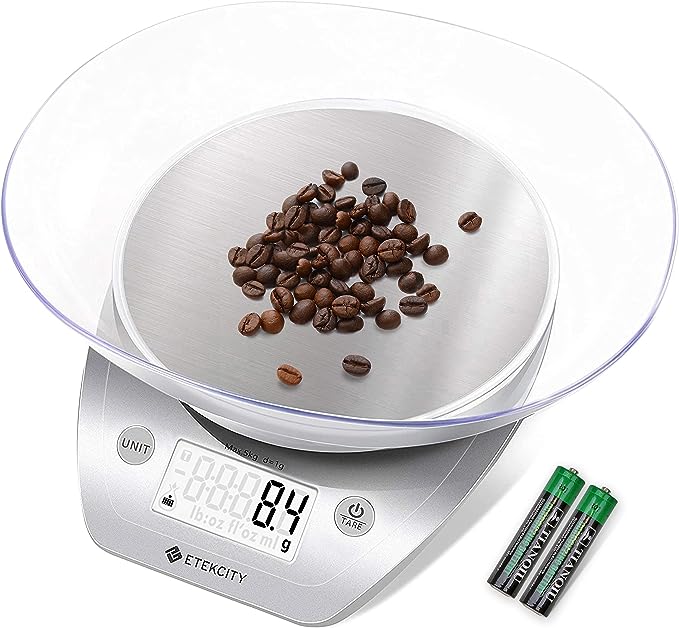
Etekcity Luminary Kitchen Scale - $18
A digital kitchen scale with 0.1g precision is all you need to measure coffee doses consistently. Once you've found a ratio that works - say, 15g coffee to 250g water - a scale lets you hit that exact ratio every time. It's the pairing that makes a burr grinder's consistency fully useful. Together, grinder and scale are the two most impactful upgrades for anyone serious about improving their daily cup.
Check it out →Frequently Asked Questions
Can I use a blade grinder for pour over or French press?
Technically yes, but the results will be significantly compromised. Pour over is especially sensitive to grind inconsistency - uneven particles cause uneven flow and extraction. French press is more forgiving because immersion brewing is less sensitive to particle size variation, but even French press benefits from a more consistent coarse grind. Blade grinders also make it impossible to reliably target "coarse" vs "medium" grind for different methods.
Is a hand grinder better than a blade grinder?
Yes, significantly. Most manual hand grinders use conical burrs and produce a more consistent grind than any blade grinder. A $25–$40 hand grinder typically outperforms a $50 blade grinder on grind consistency. The tradeoff is time - hand grinding 20–30 grams of coffee takes 1–2 minutes of effort. For single cups, this is manageable; for larger batches, it becomes laborious. Hand grinders are popular among travelers and people who appreciate the hands-on ritual.
How fine can a blade grinder actually grind?
Blade grinders can produce very fine powder if you run them long enough, but they can't produce a uniform fine grind. Running a blade grinder for 30 seconds produces a mix of powder and larger fragments - not the uniform fine grind that espresso requires. For espresso, a precise, consistent fine grind is essential, and no blade grinder can reliably deliver this. For espresso at home, a burr grinder is not optional - it's a requirement.
Does a burr grinder make a noticeable difference for drip coffee?
Yes. Drip coffee machines are somewhat more forgiving than pour over, but they still benefit significantly from a consistent grind. With a blade grinder, drip coffee often tastes inconsistent from batch to batch. With a burr grinder set to medium, you get a repeatable medium grind that extracts evenly through a paper filter, producing a cleaner, more defined cup. The difference is more obvious with medium and light roast beans than with dark roast.
At what price point does a burr grinder become worth it?
The most significant improvement happens at the entry level - any burr grinder outperforms any blade grinder on consistency. A $15–$25 electric burr grinder is worth the investment for anyone who makes coffee daily. Beyond that, improvements are incremental: $50–$80 grinders have better burrs and more settings; $150+ grinders offer professional-grade consistency for espresso. For most home brewing methods (pour over, French press, drip), an entry-level burr grinder covers 90% of what you need.
The Verdict
Burr grinders are worth it at essentially every price point. Even a $15–$18 entry-level burr grinder outperforms any blade grinder on the only metric that matters for coffee quality: grind consistency. The flavor improvement is real, noticeable, and immediate. If you currently use a blade grinder and feel like your coffee is flat, muddy, or inconsistent despite using quality beans, the grinder is almost certainly the problem.
You don't need to spend $150 to see a dramatic improvement. Start at the entry level, pair it with a kitchen scale, and dial in a ratio that works for your preferred brewing method. That combination - consistent grind, accurate measurement - is the foundation of genuinely good home coffee.